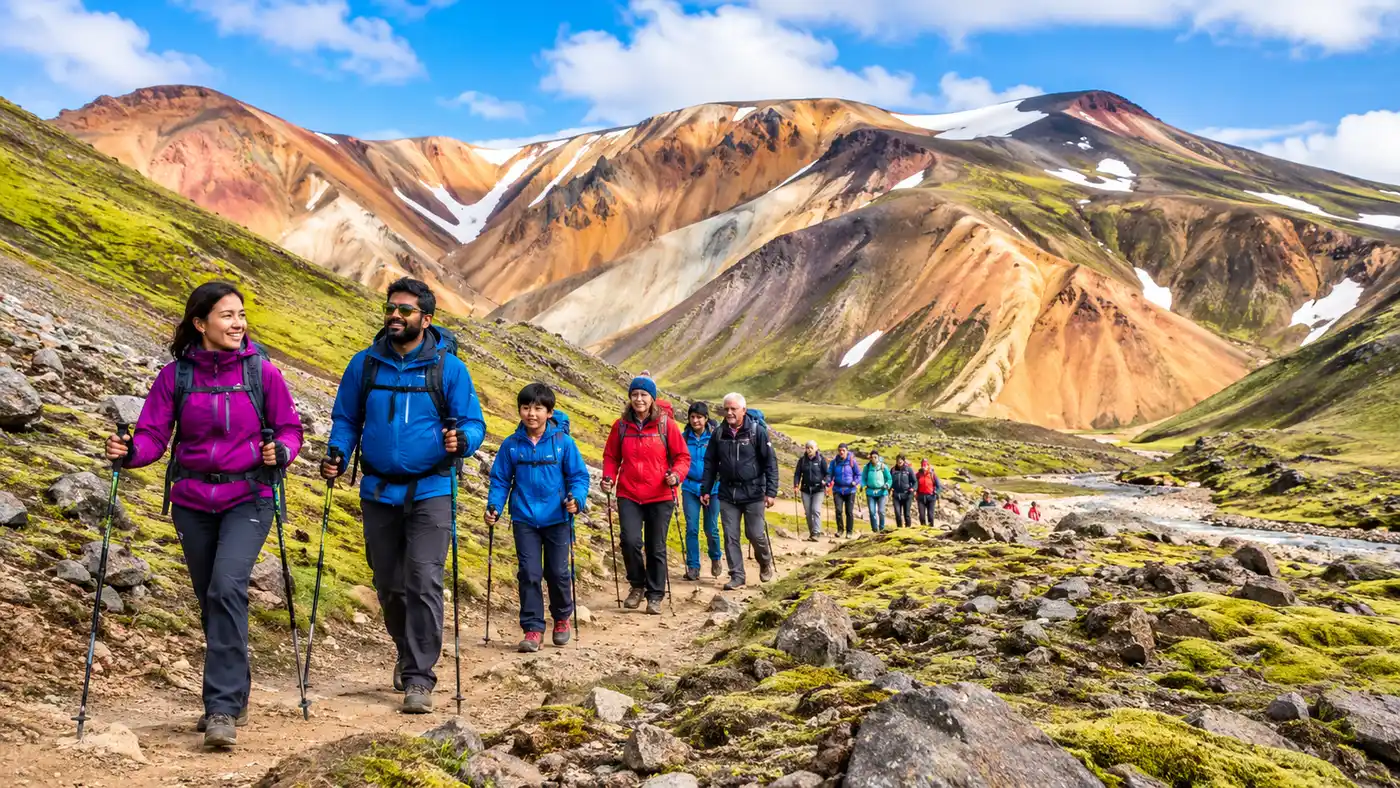
Landmannalaugar Weather & Best Time to Hike: Month-by-Month Guide
Sitting inside a vibrating tent behind the warden hut with horizontal sleet battering the nylon at two in the morning will teach you respect for the southern highlands. Everyone dreams of sunny ridgelines across the orange rhyolite mountains, but finding the best time to hike laugavegur trail comes down to a small seasonal window where the winter snow has melted enough to expose the track and autumn gales have not yet shut down transport. The trail does not care about your vacation calendar.
Highland weather behaves independently from coastal towns. Reykjavik might enjoy a mild 17 degrees while Landmannalaugar shivers under dense cloud cover, driving rain, and a raw 4-degree wind. Choosing your dates carefully determines whether you spend four days admiring multicolored volcanic craters or shuffling forward blind through waist-deep slush. Here is the reality of the seasons, month by month.
Book your landmannalaugar hike experience:
What Decides the Best Time to Hike Laugavegur Trail
The hiking calendar is dictated entirely by road conditions and snowpack. The trail sits high up on the interior plateau, meaning winter sticks around far longer than it does along the Ring Road. Mountain roads leading into the area, specifically the F-roads, remain legally closed to normal traffic through late spring while the subsoil thaws out into deep, impassable mud.
Road administrators inspect the tracks weekly throughout May and June. If you drive on these routes before the official opening, you face thousands of dollars in fines because tires tear deep ruts into the fragile soil. For hikers planning ahead for the Landmannalaugar opening 2025 or Landmannalaugar opening 2026 seasons, the pattern rarely varies by more than a week or two. Early access depends on how much snow fell between December and March, followed by how warm May turns out to be.
When asking if the Laugavegur trail is open, you are really asking two questions: are the buses running, and are the warden huts staffed? The huts operated by Ferðafélag Íslands typically welcome their first overnight guests in the third or fourth week of June. Before those wardens arrive, drinking water is turned off, the emergency shelters are locked to casual walk-ins, and snowfields conceal the trail markers between Landmannalaugar and Hrafntinnusker.
Note: Opening dates fluctuate every single spring based on snow density. Check the road administration logs before booking non-refundable transport, as heavy late snow can delay bus routes by over a week.
Planning transport means watching whether the mountain roads are cleared. Most travelers take scheduled 4x4 buses, which start operating the moment the tracks dry out. If you plan on driving into Landmannalaugar yourself, you must wait for the official status to switch from impassable to open on road monitoring sites. Unbridged river crossings on the F208 south will destroy standard rental cars if attempted too early in the thaw.
Month-by-Month Highland Weather and Trail Conditions
Every single month in the highlands carries a distinct personality. The transition from frozen desert to bustling trekker route happens within a three-week scramble, and the shift back to snowstorms happens just as abruptly. Here is what you will encounter throughout the year.
| Month | Average High / Low (°C) | Precipitation Days | Trail Status | Road Access |
|---|---|---|---|---|
| June | 9°C / 2°C | 17 days | Snowbound early, opens late | Closed until late June |
| July | 12°C / 6°C | 15 days | Fully open, busy | Open to 4x4 vehicles |
| August | 11°C / 5°C | 16 days | Prime conditions, dry dirt | Open to 4x4 vehicles |
| September | 7°C / 1°C | 19 days | Huts close mid-month | Closes as early snow falls |
| October - May | 1°C / -7°C | 22 days | Impracticable for hikers | Impassable, super jeeps only |
June is messy. In early June, Landmannalaugar in May levels of cold linger across the plateau. Huge snow bridges span the ravines, and the ground resembles a soggy brown sponge. By the final days of June, wildflowers show up in sheltered pockets, but you must still prepare for cold mud and frozen gear.
July represents peak summer. Landmannalaugar weather July patterns bring the warmest afternoons of the season, occasionally nudging 15 degrees when the sun breaks through the overcast. The days feature 20 or more hours of daylight. You can hike at midnight without a headlamp, which is a great trick if you want to avoid the crowds that fill the path between ten in the morning and three in the afternoon.
August delivers the most reliable conditions. Laugavegur trail weather August conditions usually see the lowest remaining snowpack on the high pass, meaning firm footing and visible trail markers. Frost returns to the high plateau around Hrafntinnusker by mid-August, reminding everyone that sub-arctic autumn arrives quickly.
Landmannalaugar September is gorgeous, moody, and risky. Birch leaves turn bright yellow in Þórsmörk, and the moss glows vibrant green under dramatic storm clouds. Night temperatures drop below freezing across all camps. By the third week of September, mountain huts shut off their water, bus operators suspend scheduled services, and winter starts clawing back the volcanic passes.
From late autumn into spring, the region turns hostile. Visiting Landmannalaugar October means preparing for deep snowdrifts and sub-zero temperatures. Landmannalaugar in November through Landmannalaugar in March is strictly the domain of monster truck super jeeps and cross-country ski expeditions. Trying to trek the Laugavegur trail winter route on foot without expedition gear is outright suicide.
Mid-Summer Conditions: July and August on the Trail
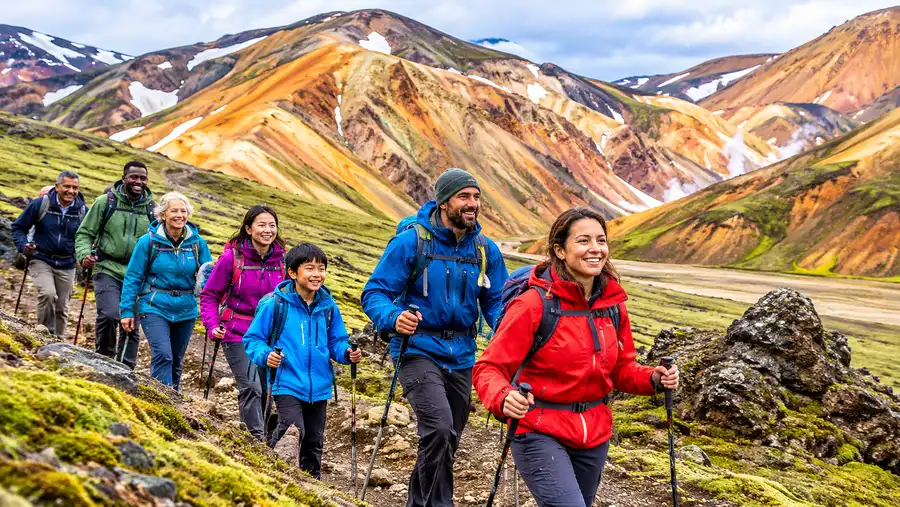
If you want the safest, most comfortable experience, this eight-week stretch is the only window to consider. Laugavegur trail weather July days are bright, green, and lively. The moss lights up against black sand plains, and the hot spring stream in Landmannalaugar fills up with hikers soaking sore knees every evening.
Do not let the word "summer" lull you into a false sense of security. Laugavegur trail temperature ranges remain chilly by any regular standard. While an afternoon in the valley might feel warm at 13 degrees, climbing 500 meters up toward the obsidian fields drops that temperature straight down to 4 degrees. Add a 35-knot wind and sudden rain, and the wind chill dives below freezing within twenty minutes.
Pro tip: Pitch your tent with the narrowest profile facing east. Katabatic gusts routinely tumble down from the Torfajökull ice cap during early morning hours and will flatten wide tent panels.
Managing trail hazards in mid-summer comes down to preparation and awareness. Even during peak season, you will encounter distinct challenges:
- Rotten snow bridges: Large sections of snow linger across the deep gullies near Hrafntinnusker into late July, hiding rushing meltwater streams underneath weak crusts.
- Fluctuating river depths: Glacial rivers like the Bláfjallakvísl run ankle-deep after cold nights, yet swell past your thighs by late afternoon when warm sunshine speeds up glacial melting.
- Thermal exhaustion and hypothermia: Hikers frequently strip down to t-shirts during steep climbs, get soaked in sweat, and then catch severe chills when cold ridgetop gales hit them.
- Campground crowding: Campsites at Álftavatn and Emstrur host dozens of tents nightly, requiring earplugs if you want to sleep through flapping tent fabric and early risers.
Packing properly makes these mid-summer issues simple to handle. High-end waterproofs, sturdy footwear, and neoprene socks for the river wades are non-negotiable items on any standard Laugavegur trail packing list. Good equipment turns rough weather into a memorable adventure rather than an emergency extraction.
Book your landmannalaugar hike experience:
Shoulder Seasons and Landmannalaugar in Winter
Trekking outside July and August requires a completely different mindset. September appeals to photographers who want dramatic lighting, dark night skies filled with Northern Lights, and empty trails. The tradeoff is simple: you face ferocious windstorms, frequent nighttime freezes, and shortened daylight hours that punish slow walkers.
Laugavegur trail September expeditions must be completely self-reliant. If a snow squall rolls in over the pass, trail markers disappear under white drifts within an hour. You cannot count on other hikers stumbling along behind you to help with navigation. Once the wardens pack up their gear and lock the huts, rescue response times stretch out significantly.
By late autumn, the landscape shifts from hiking ground to pure arctic wilderness. If you attempt visiting Landmannalaugar iceland in winter, you will not be walking the trail. Instead, specialized tour companies navigate modified 4x4s carrying massive 46-inch tires through deep snowpacks, fording slush-choked rivers to reach the central valley. The hot pool remains warm year-round, steaming against a pure white background of snowbound hills.
- Checking live cameras: Check the Landmannalaugar live camera before leaving the lowlands to verify real-time visibility, snow cover, and ground conditions.
- Winter accommodation rules: The main mountain hut stays locked during winter, accessible only to guided groups with prior bookings and caretaker keys.
- Daylight limitations: November brings less than five hours of usable daylight, leaving zero room for navigation errors if you venture away from camp.
- Emergency satellite communicators: A Garmin inReach or similar satellite tracker becomes mandatory safety equipment once seasonal bus traffic stops.
Checking a reliable Landmannalaugar webcam gives you an unfiltered look at what is happening on the ground. Weather stations report numbers, but seeing whether the gravel flats are exposed or buried under fresh snowdrifts tells the real story. When the webcam shows heavy blizzard conditions, even the super jeep convoys stay safely parked in Hella.
Reading the Landmannalaugar Weather Forecast
Highland weather forecasts must be interpreted with healthy skepticism. If you pull up a generic Landmannalaugar weather 14 days outlook on a standard phone app, delete it. Those algorithms apply flat lowland models to extreme alpine geography, rendering them completely useless.
The only forecast worth checking is the Icelandic Meteorological Office site at vedur.is. Pay attention to the mountain forecast maps, wind direction, and barometric pressure drops. A sudden fall in pressure almost always signals an incoming Atlantic low-pressure system, bringing sustained gales and heavy rain that can pin hikers down inside their tents for 36 hours straight.
Wind is the real danger in the highlands, not rain. A damp afternoon at 8 degrees with calm air is comfortable enough if you are moving. The exact same temperature with a 45-knot wind will strip body heat through wet clothing at an alarming rate. When local rangers warn hikers to stay put in the huts due to high wind warnings, listen to them without argument.
Look at the altitude differences across the four main trail stages. Landmannalaugar sits around 600 meters above sea level, but the route climbs quickly to over 1,000 meters at Hrafntinnusker before dropping back down toward Lake Álftavatn. That high pass catches every scrap of severe weather sweeping off the southern glaciers, creating localized fog and whiteout conditions while the lower valleys look entirely clear.
Frequently Asked Questions about best time to hike laugavegur trail
What is the single best week to hike the trail?
The last week of July through the first week of August offers the greatest combination of melted snowbridges, dry trail surfaces, warm water crossings, and operational hut facilities.
Can I hike the Laugavegur trail in June?
Only during the final week of June, and even then, only if winter snow has melted quickly and the park wardens have officially opened the route. Hiking earlier means dangerous snow conditions, muddy terrain, and closed transport links.
How bad is the rain on the trail?
Rain can fall continuously for three days without a break, driven sideways by high winds. Standard city waterproof jackets wet out quickly; you need heavy-duty mountain shells rated to at least 20,000 mm hydrostatic head.
Is the road to Landmannalaugar open year-round?
No. The mountain F-roads into Landmannalaugar remain closed to regular vehicles from early October until mid or late June. Only heavily modified super jeeps can access the valley during the winter months.
Quick Reference
- Peak hiking season: July 10 to August 25
- Average summer high: 11°C to 13°C
- Hut operating season: late June to mid-September
- High pass elevation: 1,027 meters at Hrafntinnusker
- F-road access: 4x4 vehicles only, strictly summer
Book your landmannalaugar hike experience:
The Reality of Highland Weather
The Icelandic highlands will not bend to your itinerary. You might spend six months researching gear, booking mountain huts, and obsessing over trail maps, only to spend your trek staring at the back of your friend's wet jacket in thick fog. That raw unpredictability is what makes reaching Þórsmörk feel like a genuine achievement. Respect the mountain forecasts, pack clothing for cold rain, and treat every single clear, sunny hour across the rhyolite ridges as an incredible gift.
Read more about landmannalaugar hike.