Landmannalaugar Hot Springs: Bathing Guide to the Natural Pools
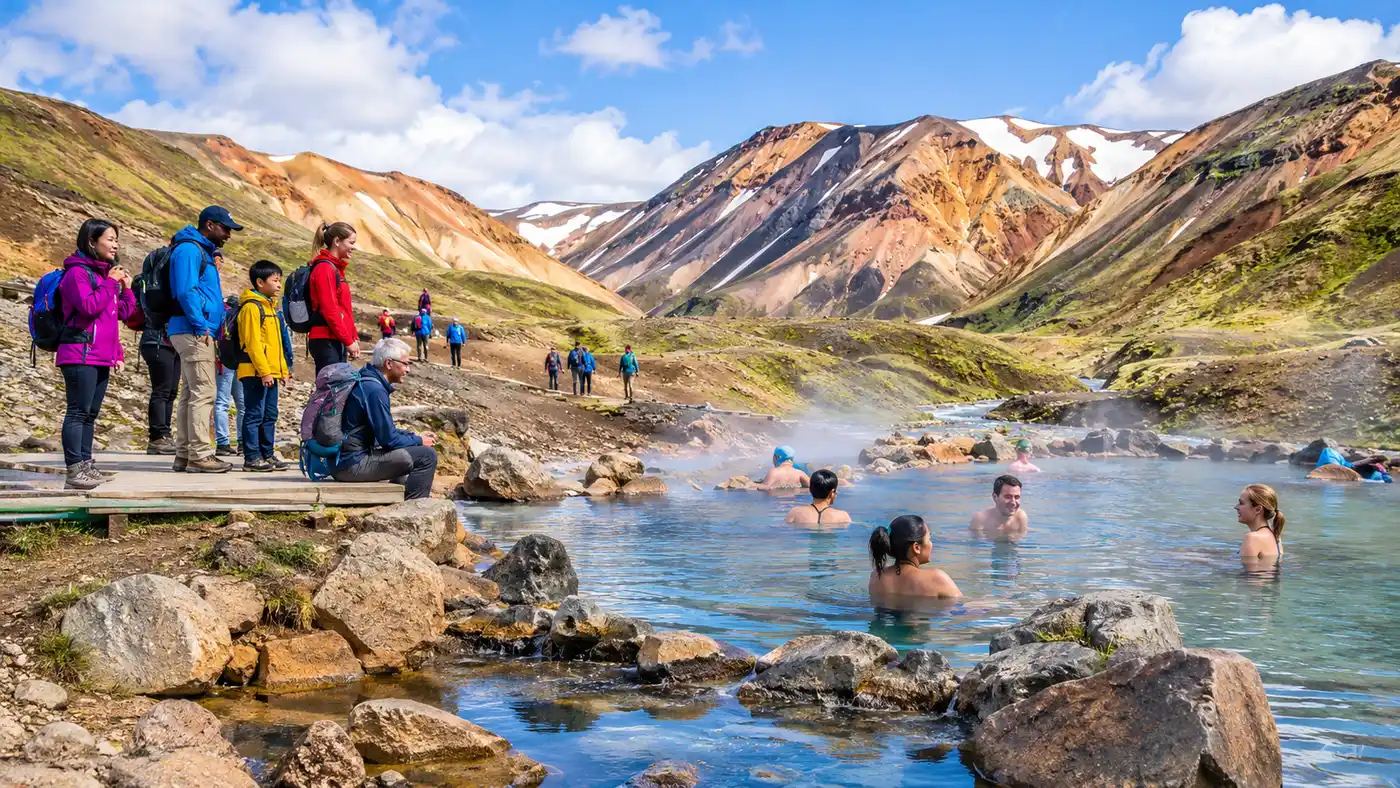
There is a specific kind of relief that only comes when you slide your aching, trail-beaten body into the landmannalaugar hot spring after six hours of fighting highland headwinds. The air temperature hovers somewhere around eight degrees Celsius. Rain might be spitting sideways off the rim of the Laugahraun lava field, but the gravelly riverbed beneath your belly is pouring out steady, mineral-rich heat. You shift your shoulders an inch to the left to catch a pocket of cooler stream water, let your head rest against the timber edge of the wooden deck, and listen to the muffled chatter of hikers comparing blisters in five different languages.
This is not a manicured resort like the Blue Lagoon. You will not find swim-up bars, silica mud dispensers in plastic buckets, or tiled changing suites with heated floors. Instead, the landmannalaugar geothermal pools iceland offers are completely wild river channels where boiling subterranean discharges collide with frigid glacial runoff. Getting in requires stripping down in the highland breeze and navigating slick pumice gravel on your bare feet. It is messy, wonderfully raw, and easily one of the most rewarding wilderness baths in the North Atlantic. Here is what you need to know before walking down that boardwalk with a towel clutched to your chest.
Book your landmannalaugar hike experience:
The Science and Setting of the Landmannalaugar Geothermal Area
The entire southern highland basin sits inside the Torfajökull volcanic system. It is one of the largest silicic volcanic centers on the island, which explains why the surrounding peaks look like painted brushstrokes of yellow rhyolite, deep green moss, and glossy black obsidian. Beneath this surreal backdrop lies an enormous magma chamber that heats groundwater deep in the fractured bedrock.
At the base of the towering Laugahraun lava edge, that superheated groundwater bubbles right out of the dark stone at temperatures near 75 degrees Celsius. If it ran unchecked, you would scald your skin instantly. Luckily, a cold glacial stream skirts the exact same lava wall. The two water sources collide in a broad, shallow bend, creating the landmannalaugar natural pool that bathers have gathered in for centuries. In Icelandic, Landmannalaugar literally translates to the "People's Pools" - named by 18th-century shepherds and travelers who took shelter here while driving sheep across the interior desert.
Because the pool is an active river rather than a concrete basin, the water conditions change constantly. Heavy rains send cold runoff surging down from the mountains, cooling off the main channel. Midsummer dry spells reduce river flow, which lets the geothermal vents push the overall temperature up past 40 degrees. You are swimming inside a living hydrological experiment. When you dip beneath the surface, you can feel thermal stripes wrapping around your legs - warm current on your calves, icy ribbon across your hip, and a pleasant 38 degrees against your ribs.
Note: During particularly warm stretches in late July, harmless microscopic trematode larvae sometimes show up in the warm marsh shallows, causing a mild reaction known as swimmer's itch. To avoid itchy red spots, stay away from stagnant weed pockets and towel off aggressively the second you step onto the deck.
Finding Your Temperature at the Landmannalaugar Geothermal Pool
The bathing pool stretches roughly 40 meters along the base of the lava field. It looks like a single continuous pond, but regular visitors know it has distinct microclimates. Finding a comfortable spot is a matter of slow, patient maneuvering on your knees.
The western end, right where the water seeps from under the jagged basalt rocks, is the hottest zone. You can see vapor drifting off the surface here even on bright summer afternoons. Sit within arm's reach of the rock wall and the gravel beneath your heels can feel painfully hot. Most bathers head downriver toward the center, where the current widens out to about ten meters across and settles into a comfortable soaking temperature. If you go too far toward the footbridge, the glacial brook dominates and you will end up shivering within ten minutes.
Depth varies just as much as temperature. In most spots, the water reaches somewhere between your mid-thigh and waist if you are standing upright. You do not really swim here; you sit cross-legged or recline on your elbows with your shoulders submerged. The bottom is covered in smooth volcanic silt, black pea-gravel, and the occasional sharp chunk of rhyolite. Scooping a small hollow in the gravel with your toes lets you nestle down low enough to keep your neck beneath the thermal layer when the highland wind picks up.
| Pool Zone | Average Temp | Depth | Bottom Surface | Best For |
|---|---|---|---|---|
| Lava Wall Source | 40°C - 44°C | 0.3 - 0.6 m | Coarse pumice, hot gravel | Intense heat, experienced bathers |
| Main Central Basin | 37°C - 39°C | 0.8 - 1.1 m | Fine silt, small pebbles | Long, relaxed soaks |
| Downstream Footbridge | 32°C - 35°C | 0.5 - 0.8 m | Packed gravel, sand | Cooling off on sunny days |
The water clarity is decent, though it turns milky gray whenever a dozen people kick up the mineral silt at once. You will notice a faint hint of sulfur in the air, but it is much milder than what you smell around the roaring fumaroles over at Námafjall or Hverir. It is mostly clean river water carrying dissolved silica and trace volcanic salts that leave your skin feeling strangely soft after half an hour.
Facilities, Changing Decks, and Highland Logistics
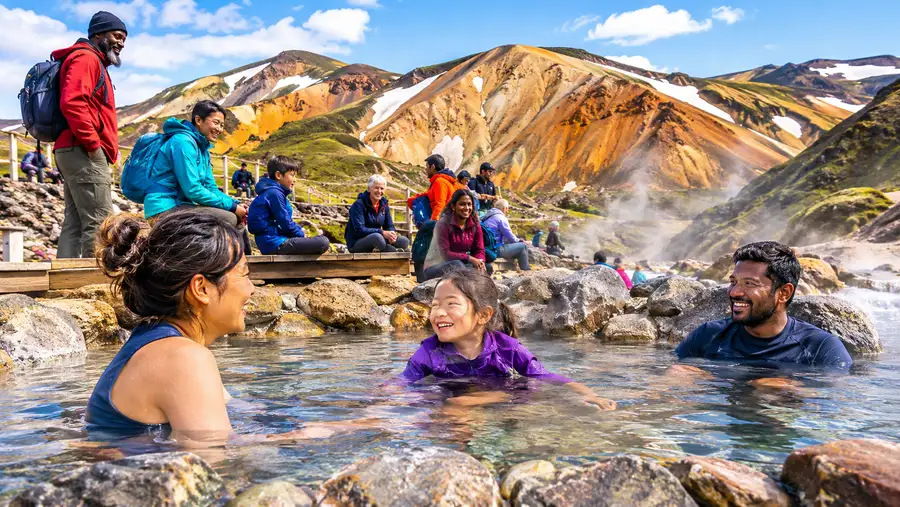
If you arrive expecting private changing cubicles and heated mirrors, turn back now. The infrastructure at the landmannalaugar bathing place is minimalist and deliberately low-impact. The park authorities built a long, raised wooden boardwalk stretching from the central dirt path straight out across the fragile marsh to the pool edge, ensuring visitors do not trample the sensitive green moss that takes decades to recover from human boots.
At the end of this boardwalk sits a wide timber deck equipped with simple wooden benches and pegs for hanging jackets. There are no walls, no curtains, and no roof. You undress out in the open air, fold your trousers neatly on a bench, and quickly step down the wooden ramp into the warm water before the Arctic draft makes you reconsider your life choices. Modesty is an afterthought in the Icelandic highlands; everyone is too focused on getting warm to pay attention to anyone else.
If you need an enclosed space to change, you must use the communal facilities back at the warden hut complex, which is a three-minute stroll down the gravel track. If you are staying at the base camp, our guide to the Landmannalaugar and Laugavegur huts and camping covers how wristband access for the main service block operates. Those heated indoor showers cost 500 ISK for five minutes of water, whereas soaking in the natural pool itself is free.
Pro tip: Slip a pair of cheap neoprene water booties or light rubber slide sandals into your daypack. The wooden ramp gets slick with river algae, and the volcanic stones on the bottom can feel like broken pottery under tender hiker feet.
Getting your gear organized before walking out onto the deck will save you a world of misery when it is time to exit. A few smart packing choices make the difference between a glorious soak and a freezing scramble:
- Dry bag or heavy plastic sack: highland rain showers roll in without warning, and leaving your dry thermal layers exposed on an open bench guarantees a wet, miserable walk back to camp.
- Warm woolen beanie: your head remains above water exposed to freezing wind, so keeping a dry hat on while soaking prevents rapid heat loss.
- Compact microfiber towel: standard cotton beach towels get soaked by drifting highland mist long before you finish bathing.
- Slip-on footwear: lacing up stiff, muddy hiking boots with wet, numb fingers is an ordeal you want to avoid on a breezy deck.
Book your landmannalaugar hike experience:
Pairing Your Soak with Day Hikes and the Laugavegur Trail
Nothing earns a natural bath quite like sweating through volcanic scree. The landmannalaugar hot springs iceland maintains are famous largely because they sit at the crossroads of some of the best walking country in northern Europe. Most people soak at the bookends of a long day on the trails, and the atmosphere in the pool changes dramatically depending on the clock.
Around two in the afternoon, the river gets quite social. Tour buses arrive from Reykjavík via the southern F-roads, depositing day trippers who wander down for a quick dip or a look at the steam. If you want a more solitary experience, hike the dramatic circuit up Bláhnúkúr or explore the active steaming vents of Brennisteinsalda first. You can check our favorite routes in the Landmannalaugar day hikes guide to time your descent so you hit the water right when the day-tour crowds pack into their buses around 4:30 PM.
Then there are the laugavegur hot springs seekers. For southbound hikers embarking on the 55-kilometer journey toward Þórsmörk, this natural pool serves as the launch party. Groups gather in the evening, soaking sore calves while swapping forecasts about the snow patches on the high plateau near Hrafntinnusker. Southbound walkers finishing the trail in reverse use the pool as their final sanctuary, limping into the warm current to celebrate four days of river crossings and mountain passes. That camaraderie makes the evening soak feel like an old-world wilderness gathering.
If you stay overnight in the campsite, try heading into the water at midnight during June or early July. The midnight sun casts a low, golden amber hue across the rhyolite mountains, the wind frequently drops dead still, and you might have 40 meters of steaming geothermal river entirely to yourself. Steam rises into the cool evening stillness, and the only sound is the cold brook burbling past the lava crust. It is pure magic.
Rules, Etiquette, and Safety in Natural Thermal Baths
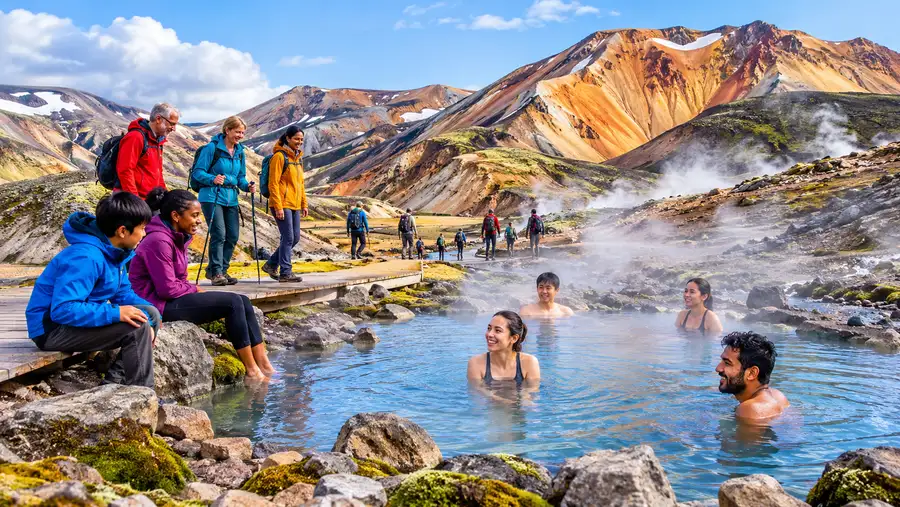
Because the pool is an unchlorinated, free-flowing natural environment, it requires a higher degree of personal mindfulness than commercial thermal baths in town. The park wardens keep a watchful eye on the area, but preserving the pool depends on bathers treating it with respect.
The ecosystem here is delicate. Chemical residues from modern cosmetics, suntan lotions, and conditioners build up in the gravel silt and damage the native highland microflora. There are strict ground rules everyone must observe:
- No soap or shampoo in the pool: washing with cleansers directly in the natural river is strictly forbidden because it poisons downstream wetlands.
- Shower beforehand: use the paid facilities at the main hut to wash thoroughly before entering the hot spring channel.
- Pack out all waste: never leave empty beer cans, plastic wrappers, or band-aids on the wooden platform benches.
- No glass containers: dropping a glass bottle on the underwater gravel creates invisible hazards for barefoot bathers that are nearly impossible to clean up.
- Keep voices down: the surrounding lava canyon naturally amplifies noise across the valley, so skip the portable Bluetooth speakers.
Safety is mostly common sense, but the wild nature of the river presents a few quirks. Never plunge your face directly into the warm mud or drink the pool water. While geothermal runoff is generally sterile at the source, wild birds and hundreds of hikers pass through these shallows daily. If you are traveling with young children, keep them close. There are spots near the lava wall where boiling subterranean bursts can briefly surge into the shallows, which can easily startle a small child who steps too close to an active vent.
Listen to your body regarding hydration. Sitting in 39-degree water for over forty minutes while cool air tricks your skin into thinking you are fine will dehydrate you quickly. Keep a full bottle of cold mountain water sitting on the edge of the timber deck and take regular sips throughout your soak.
Frequently Asked Questions about landmannalaugar hot spring
Is there an admission fee to soak in the hot spring?
The natural pool itself is completely free to enter. If you arrive by private vehicle or tour, you do not pay a ticket fee for the water. You will, however, need to pay the small highland day-use fee at the service building to use the indoor toilets and showers.
Can you visit and bathe at Landmannalaugar in the winter?
Access in winter is restricted to specialized super jeeps and snowmobiles driven by experienced highland operators. The thermal pool remains warm year-round, but changing outdoors in sub-zero blizzards with meters of snow on the deck requires serious preparation and guts.
Are there private changing rooms next to the pool?
No. The deck right at the water is open to the elements with basic wooden benches and hooks. If you want privacy or heated shelter, you must change in the hut restrooms roughly 250 meters away and walk over in warm clothes or a thick robe.
How warm is the water in the natural pool?
It fluctuates along the river channel, generally ranging from 36 to 41 degrees Celsius. You can control your temperature simply by wading a few paces closer to the lava wall for more heat or drifting downstream to blend in cold mountain stream water.
Quick Reference
- Water temperature: 36°C - 41°C (96°F - 106°F)
- Cost: Free natural pool access (500 ISK for hut showers)
- Facilities: Open-air wooden deck, no lockers or roof
- Best timing: Before 9:00 AM or after 7:30 PM
- Location: Base of Laugahraun lava field, 250m from main hut
Book your landmannalaugar hike experience:
The Reality of Soaking Here
Do not come to Landmannalaugar expecting luxury. Come for the sheer thrill of shedding layers under a wild Icelandic sky, feeling coarse volcanic pebbles between your toes, and letting natural geothermal heat melt the chill out of your bones. The wind will probably whip your face, your towel might pick up a bit of highland black sand, and the sprint back to your clothes will feel downright subarctic for about four seconds. Once you are nestled deep into the gravel bed with the steam curling up toward the yellow rhyolite cliffs, you will not care about any of that.
Read more about landmannalaugar hike.